Skip to content
/
/
The Greenbrier: A Look Back in Time
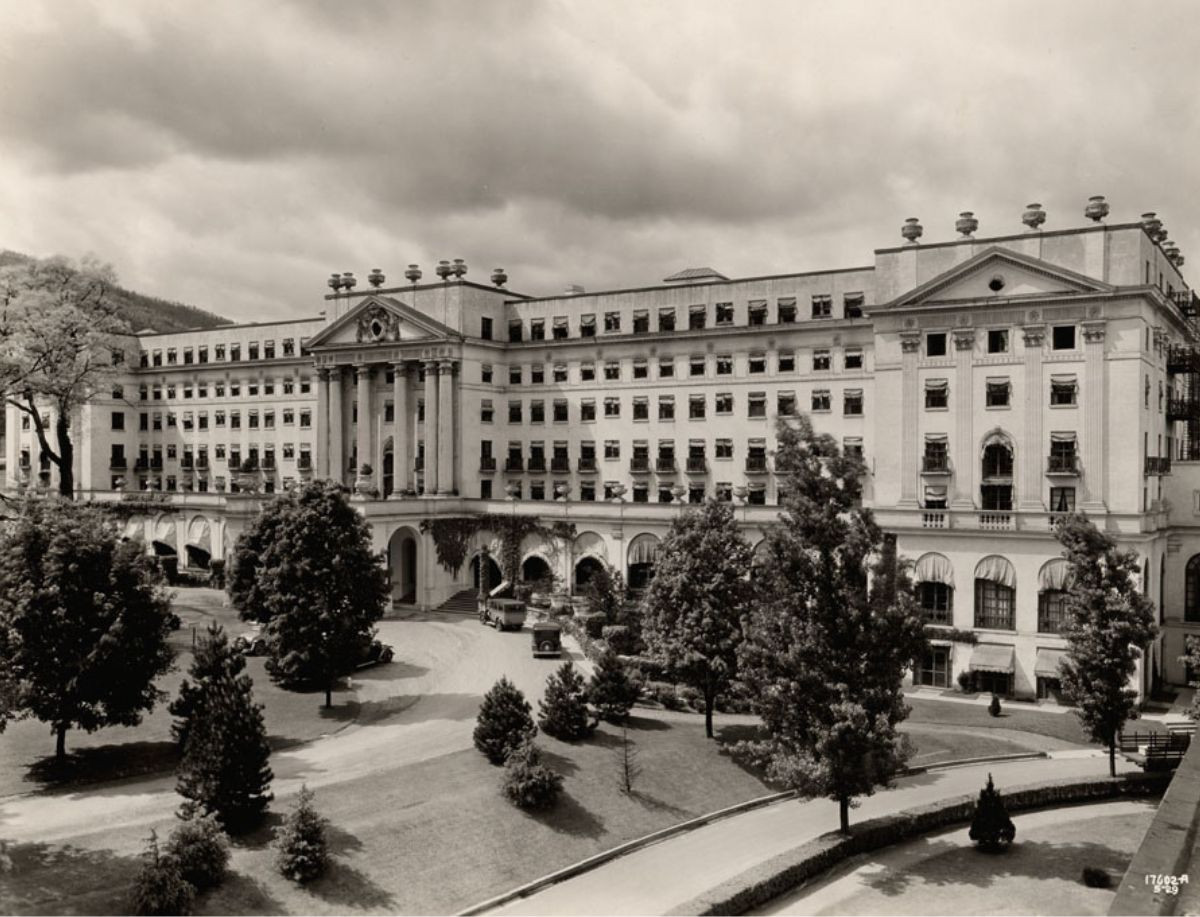
Historic photo of the front of The Greenbrier resort hotel.

The Greenbrier: A Look Back in Time

For more than 240 years, The Greenbrier has stood as one of America's most admired resorts. From its origins as a place of healing to its role as a gathering place, its story is woven into the fabric of American history.

"History is one of those things you can't buy. You either have it or you don't. " - Dr. Bob Conte

The Spring That Started It All: The Birth of The Greenbrier

Nestled in the Allegheny Mountains of what is now White Sulphur Springs, the discovery of the sulphur spring in 1778 gave rise to The Greenbrier, a grand hotel steeped in history, tradition and Southern elegance. Here is a brief history of how a wilderness spring turned into a thriving resort. 

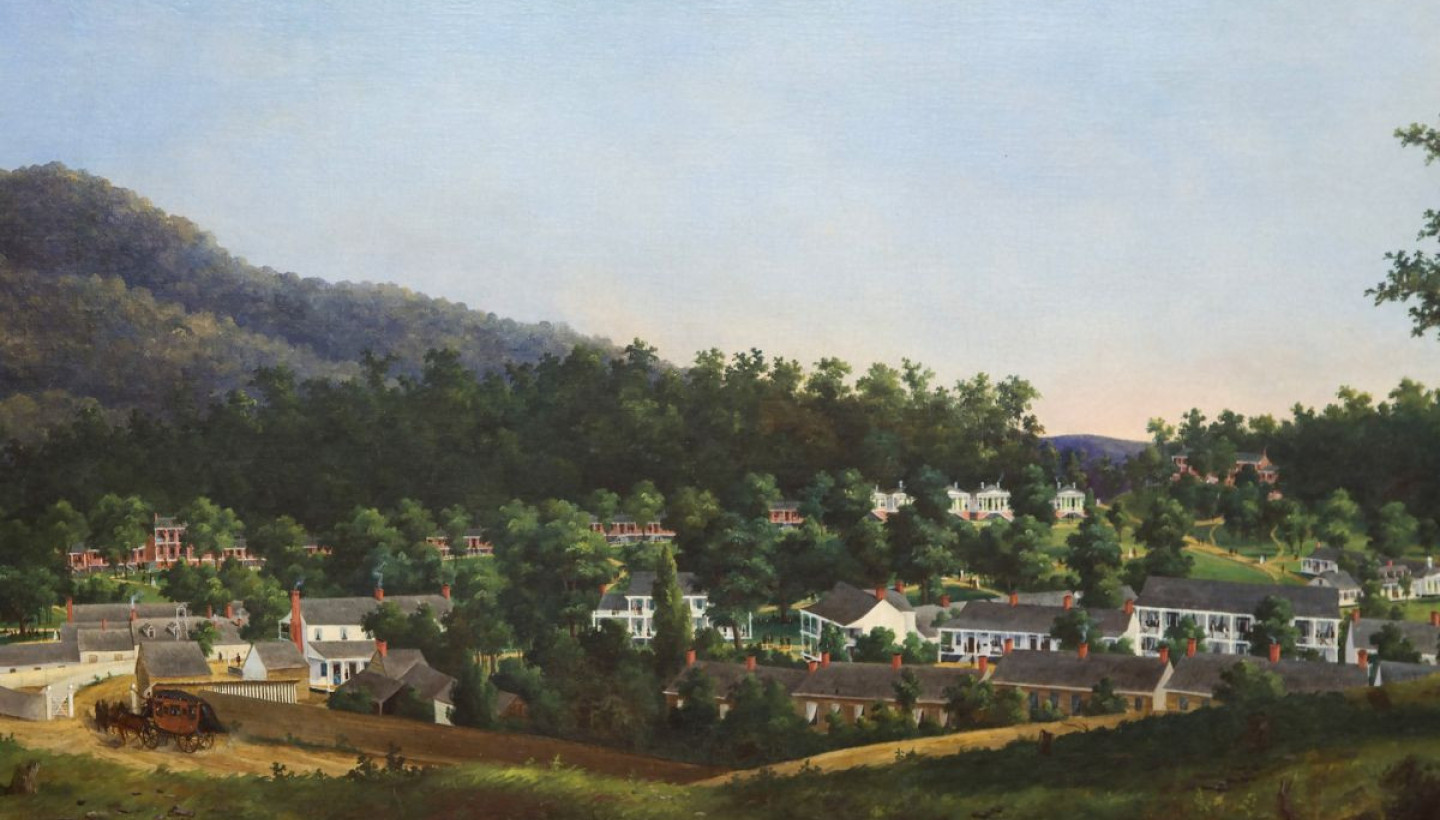
Word of a healing spring with therapeutic properties drew travelers from all around. Greenbrier County had 13 springs in all, most reached by dirt road, but the White Sulphur Springs drew the biggest crowds because the railroad ran nearby. That access elevated The Greenbrier's spring into a premier retreat for America's elite. The crowds grew, and in 1811, cabins were built to accommodate them. Then came the cottages in 1820, the President’s cottage in 1834, and eventually the Grand Central Hotel, or ‘Old White,’ in 1858.


Garden's gazebo over the spring at The Greenbrier resort.

A Playground for High Society

Beginning in the 1830s, The Old White began to see visitors of high society. It became the summer destination for America's most powerful, including politicians, diplomats and Southern elite who came not just to experience the famous sulphur waters, but to negotiate, court and celebrate. Evenings lit up with elaborate balls, alliances were sealed over the dance floor and the resort earned a reputation as the premier social stage of the antebellum South. And before the Civil War in 1864, the resort lodged five sitting presidents.

Old Greenbrier painting of what is now The Greenbrier.

Before luxury became tradition, cottages were the heart of the experience.

A Resort Reimagined For War 

This resort is no stranger to wartime. During the Civil War, the doors were closed to visitors. It served as a military command center and hospital for the Confederacy, with control switching between both sides throughout the conflict. Records show the hospital accommodated 1600 injured soldiers, with 162 passing away. The Confederate General, Robert E. Lee, visited the wounded here and even acquired his famous horse, Traveller, from Greenbrier County. Eventually, the hotel reopened in 1865. 

The 1910s were a significant turning point for this resort. The Chesapeake & Ohio Railroad Company purchased the property after its railroad completion in 1873 to create a premier destination along its main railroad line. The new owners expanded the main building and renovated it in 1913 to what we see today, The Greenbrier, a Mineral Bath and an 18-hole golf course, paying homage to the original hotel name, ‘The Old White’. And in the 1930s, more construction doubled the number of rooms to 500.

In 1942, roughly 1,700 diplomatic refugees and their families lived at the hotel, enjoying fine dining, recreational activities, shopping and schooling for their children. Even with these comforts, boredom and unease often led to conflicts between residents.

During WWII, the U.S. Army bought the hotel for $3.3 million, drawn by its vast square footage and protected location, and converted it into a 2,000-bed hospital that treated over 24,000 soldiers. The Cold War brought a new secret: a bunker codenamed Project Greek Island, built to shelter 535 members of Congress in the event of a nuclear attack and kept hidden for 30 years before a reporter brought it to light. Through war, diplomacy and the shadow of the Cold War, The Greenbrier has proven to be far more than a luxury resort; it is a living piece of American history.


The Greenbrier resort's bunker door opening.

Color Meets The Greenbrier

Dorothy Draper is a famous name and was a special friend of The Greenbrier. Shortly after WWII ended, the C&O Railroad Company knew the hotel needed revitalization. It hired Draper for her talent with grand-scale transformation and her pioneering style, which focused on happiness. She oversaw every detail in the building, making sure it fit her vision of large prints and patterns, saturated and contrasting colors. Her iconic style remains as influential as ever, with its bold use of color and design serving as signature elements to The Greenbrier experience.

Dorothy Draper's interior design in lobby at The Greenbrier resort.

Teeing Up a Legacy

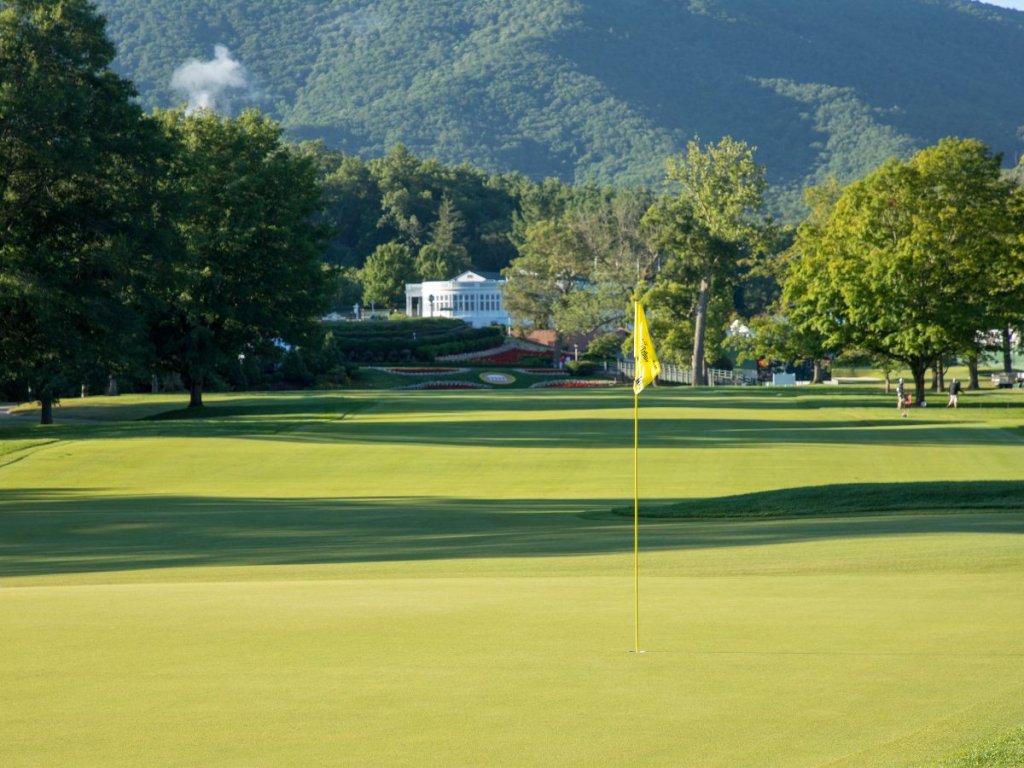
Golf at The Greenbrier is a crucial piece of its identity. The first course, “The Old White”, was constructed and designed by Charles Blair Macdonald and Seth Raynor in 1914. Now home to three championship courses, The Meadows, The Old White and The Greenbrier Course. The Meadows 9-hole course was expanded to an 18-hole course, with the dirt excavated from the construction of The Bunker in 1962. The resort's courses have hosted numerous prestigious tournaments, solidifying The Greenbrier's reputation as a premier golf destination. The Greenbrier hosted the Ryder Cup in 1979 and the PGA Tour’s Greenbrier Classic from 2010 to 2019.

Golf course with yellow flag at The Greenbrier resort.

A Legacy Written in the Mountains

In 2009, the Justice family purchased The Greenbrier, launching a modern revival that honored what the property always stood for and breathed new life into America’s most storied resort. America’s only private casino was built in 2020 underneath the hotel. The 2,500-seat tennis stadium was built in 2015 for exhibition matches, along with the 12,000 square foot chapel built to host the many weddings celebrated at the resort.

For nearly 250 years, people from all over the world have passed through, creating a guest list more impressive than the geography surrounding it. Today, the resort stands as a National Historic Landmark and is claimed by West Virginians as a source of pride and the state’s most iconic address. Its legacy isn't just about who came before; it's about what has been carefully preserved and passed down with every generation of guests.

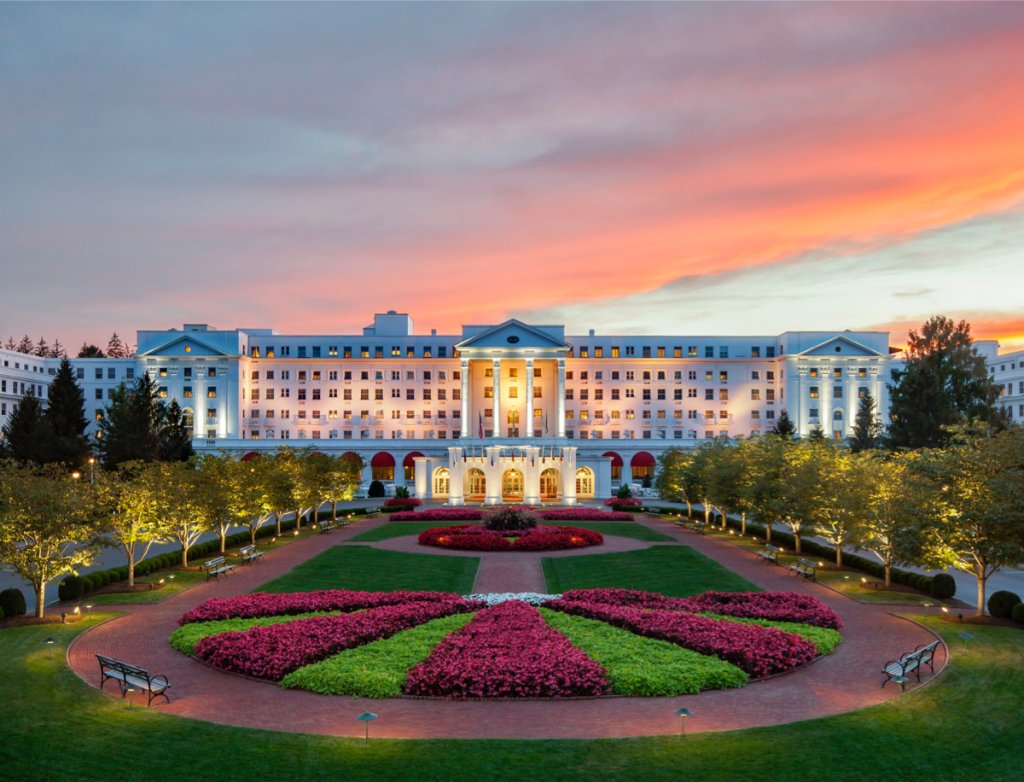
The Greenbrier Resort front with garden and trees.
GBV flourish symbol